Tel:+86 133 6177 9811
Fax:+86 0797 5712751
Email:sale02@miningshakingtable.com
Address:Guzhang Industrial Park,Shicheng County,Ganzhou City,Jiangxi Province,342700,China.
Gold deposits often contain higher levels of mud than primary ore. This mud easily binds the ore sand, forming cemented lumps and slurries. Directly feeding this mud into the beneficiation process not only reduces throughput but also severely impacts the separation process. To break up the mud lumps, water soaking and hydraulic washing, supplemented by mechanical agitation, are used to release the cemented ore sand and separate it from the clay phase. This is called washing. Since crushing and screening are performed on the same equipment, the separation of crushing and screening is conventionally referred to as washing. For example, cylindrical screens, flat screens, and hydraulic washing beds can all simultaneously perform both crushing and screening operations.
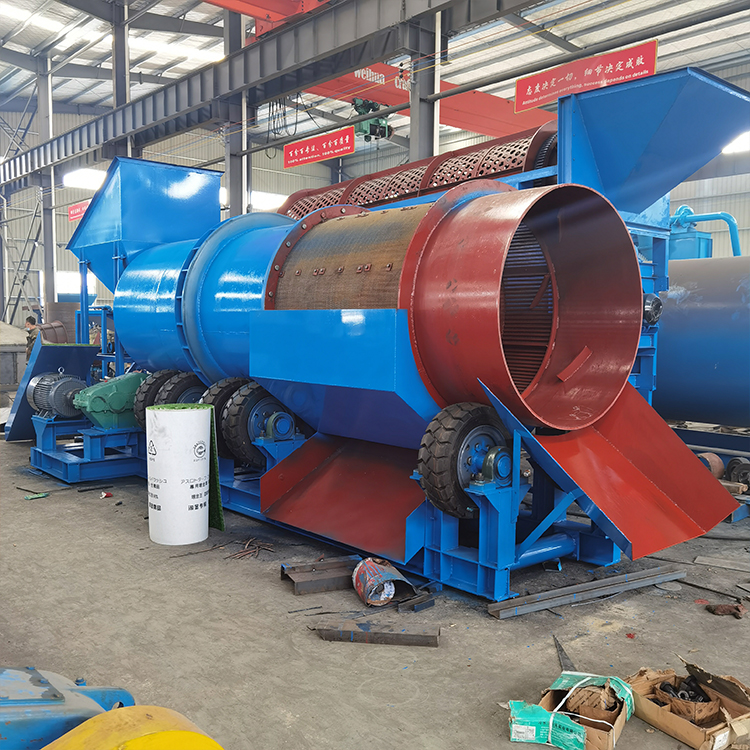
If placer gold deposits are mined hydraulically, the crushing process is essentially completed during the mining operation. This is because during hydraulic mining, the cemented ore sand is impacted by high-pressure water jets and transported and lifted in slurry form. During this process, the clayey material is subjected to hydraulic impact and intense agitation, along with sufficient soaking time, causing the clumps to break down into fine individual particles, releasing the trapped gold grains.
The clay, or mud, in placer gold sands significantly affects their washability. Because clay particles are very fine, they firmly retain moisture. Therefore, clay is essentially a two-phase system composed of a solid phase and a liquid phase (water). The ease with which clay-containing ore sands can be dispersed during crushing operations depends on the plasticity and expansibility of the clay itself.
Expansibility refers to the property of clay increasing in volume after being wetted. Before wetting, the clay is bound by a small amount of water, with particles under adhesive forces. Upon contact with water, water molecules penetrate into the voids between the particles, releasing the adhesive forces and causing the volume to increase. The faster this process occurs, the easier the ore sand is to disperse.
The swelling property of clay is related to its density. The smaller the gaps between clay particles, the less easily water can penetrate, and the slower the swelling process. Clay swelling property is also related to its wettability; the stronger the wettability of the particles, the easier it is for water molecules to penetrate, causing the clay to expand more rapidly.
Plasticity refers to the property of clay within a certain water content range to deform under pressure without breaking, and to retain its original shape without flowing after the pressure is removed. The plasticity of clay is expressed as the difference between the upper limit of plasticity and the lower limit of plasticity, called the plasticity index. The higher the plasticity index, the more difficult it is to disperse in water.
The washability of mineral sands is related not only to the plasticity and swelling property of clay, but also to its water content, permeability, and the ratio of clay to particles in the sand.
In short, the lower the plasticity of clay, the stronger its swelling and permeability, and the easier the mineral sand is to wash; conversely, the higher the plasticity, the stronger its swelling and permeability, and the more difficult it is to wash. In addition, the higher the content of lumpy materials (generally referring to coarse gravel larger than 8mm) in the ore, the greater the impact and agitation during ore washing, thus accelerating the washing process.