Tel:+86 133 6177 9811
Fax:+86 0797 5712751
Email:sale02@miningshakingtable.com
Address:Guzhang Industrial Park,Shicheng County,Ganzhou City,Jiangxi Province,342700,China.
Currently, cone crushers have become one of the mainstream products in crushing machinery. However, malfunctions and losses caused by improper operation are increasing daily. In daily production, what are the absolute prohibitions, and what are the essential precautions? Below is a summary of 15 prohibitions and 22 essential points for using a cone crusher, for your reference.
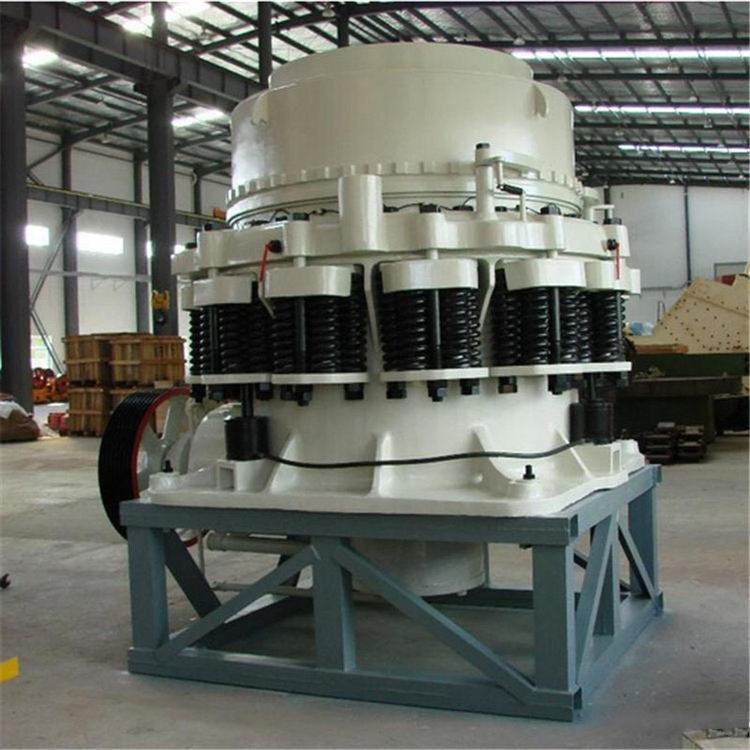
15 Prohibitions
1. Do not allow iron to pass through.
2. Do not start or stop the machine with material on it.
3. Do not operate the machine beyond the rated current or under low voltage.
4. Do not continue operating the machine when there are abnormal noises.
5. Do not inspect or adjust the machine while it is running.
6. Do not feed material eccentrically.
7. Do not allow large pieces of material (exceeding the maximum feed size in the instruction manual) to enter the crushing chamber.
8. Do not allow the adjusting ring to run out of space; if it does, widen the discharge opening.
9. Do not operate the cone crusher if the locking nut of the adjusting seat is not tightened.
10. Do not adjust the discharge port while material is being transported.
11. Do not operate the cone crusher when the lubrication station oil level is low.
12. Do not operate the cone crusher when the lubricating oil temperature is below 25℃.
13. Do not operate the cone crusher when the lubricating oil return temperature is above 55℃, but the oil pump must remain running.
14. Do not operate the cone crusher when the lubricating oil filter is clogged.
15. Do not operate the cone crusher when the alarm light on the lubrication station is illuminated.
22 Key Execution Points
1. Continuous and uniform center feeding is essential; full feeding improves work efficiency. (Every shift)
2. Check the return oil filter for copper and iron filings. (Every shift)
3. Check the lubricating oil level. (Every shift)
4. Check and record the pressure of the lubrication and hydraulic systems, and check for filter blockage. (Every shift)
5. Check the wear condition of the liners. (Every shift)
6. Check the condition of all bolts and their fasteners. (Per shift)
7. Check for lubricating oil contamination. (Per shift)
8. Check for unobstructed discharge area and remove accumulated material and debris from the frame. (Per shift)
9. Apply grease to the adjusting ring with it not locked. (Weekly)
10. Check and tighten the V-belt. (Weekly)
11. Check and repair all pipelines to prevent oil leaks. (Weekly)
12. Check and tighten the feed plate bolts. (Weekly)
13. Check the electrical interlocks of the cone crusher and lubrication station. (Weekly)
14. During equipment operation, check if individual bottom shock absorbers are suspended due to foundation subsidence or steel frame deformation, causing excessive machine swaying. (Weekly)
15. Check the accumulator pressure. (Weekly)
16. Check and repair the frame guard plates and rib guard plates. (Replace lining plates each time)
17. Check the wear condition of the spherical bearings. (Replace liner each time)
18. Check the wear condition of the tapered sleeve and straight sleeve. (Replace liner each time)
19. Check the wear condition of the upper friction disc. (Replace liner each time)
20. Check the wear condition and clearance of the bevel gears. (Replace liner each time)
21. Check the oil grade and quantity in the lubrication station. (Regular inspection)
22. Check the inlet oil pressure, flow rate, oil temperature (not lower than 25℃), return oil temperature (not exceeding 55℃), and locking cylinder and safety cylinder pressure data after the lubrication station starts.
Note: Each shift is 8 hours of machine operation.