Tel:+86 133 6177 9811
Fax:+86 0797 5712751
Email:sale02@miningshakingtable.com
Address:Guzhang Industrial Park,Shicheng County,Ganzhou City,Jiangxi Province,342700,China.
Lead-zinc ore, a crucial cornerstone of modern industry, is widely used in batteries, corrosion protection, construction, and electronics. However, lead and zinc minerals in raw ore often coexist closely with gangue and other metallic minerals, resulting in low grades that cannot be directly utilized. Flotation, with its high efficiency and flexibility, has become the mainstream process for separating and enriching lead-zinc minerals. This article will delve into the flotation process of lead-zinc ore, revealing the secrets of its transformation from rough ore to high-purity concentrate.
The flotation process begins with crushing and grinding. The raw ore is first coarsely crushed by a jaw crusher, then finely crushed by a cone crusher, and finally passes through a vibrating screen to form a closed-loop circulation, ensuring the ore particle size meets the requirements for subsequent grinding. Grinding is the key step in achieving the liberation of individual mineral particles. The ore is mixed with water in a ball mill, and through the impact and grinding of steel balls, a slurry is formed. Subsequently, the slurry is classified using hydrocyclones or spiral classifiers. Qualified particles (typically a certain proportion of which are -0.074 mm) enter the flotation process, while unqualified coarse particles are returned to the ball mill for regrinding. This process is like carefully preparing each dancer for the subsequent "separation dance," ensuring they can independently exhibit their characteristics.
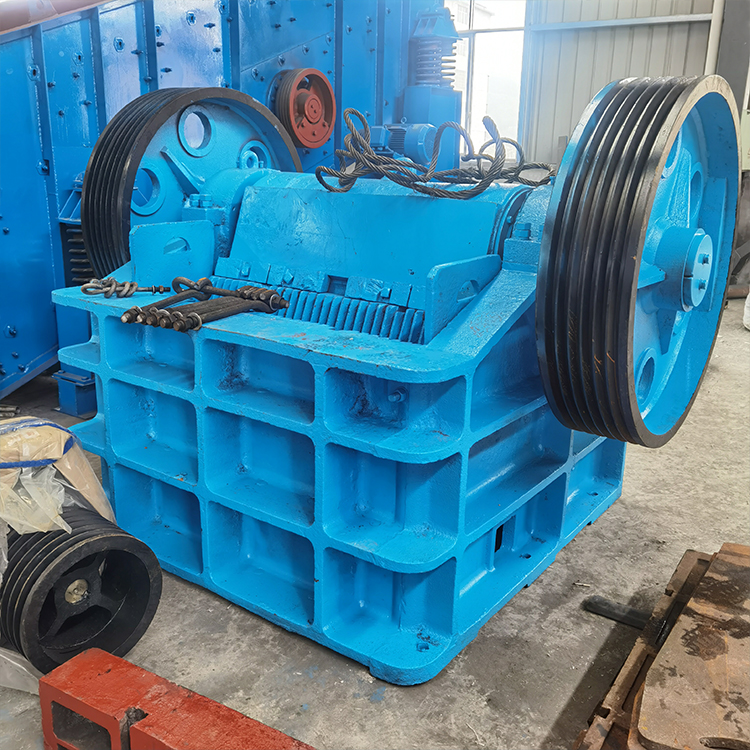
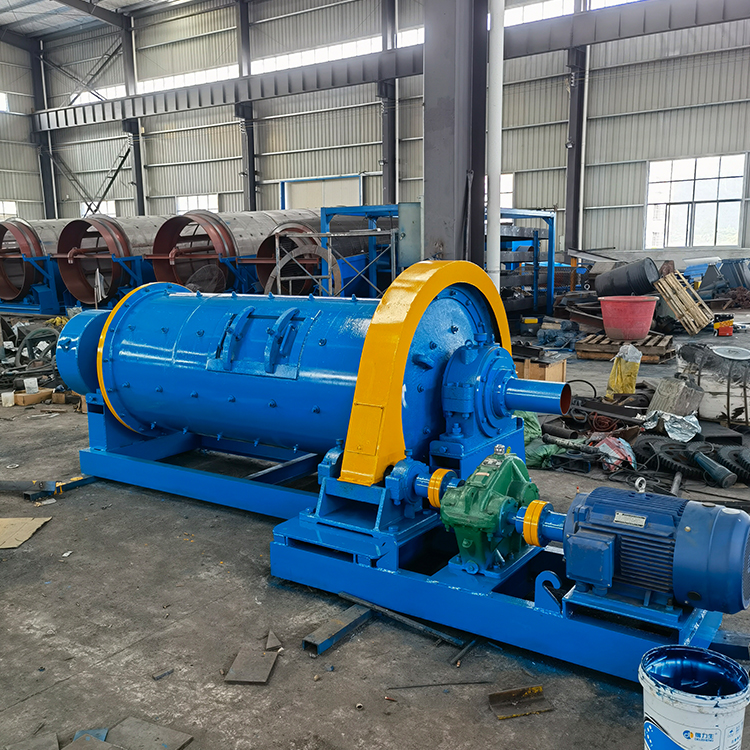
The core of flotation lies in utilizing the differences in the physicochemical properties of mineral surfaces. By adding different reagents, they selectively adhere to air bubbles, thus achieving separation. Depending on the ore properties, there are several main processes:
This is the most commonly used process. First, a lead collector (such as ethyl xanthate) and zinc and sulfur inhibitors (such as zinc sulfate and sodium sulfite) are added to the slurry. Under suitable pH conditions (usually weakly alkaline), lead minerals preferentially adhere to air bubbles, forming lead concentrate froth that is scraped off. Then, a zinc activator (such as copper sulfate) and a collector are added to the remaining slurry. The de-inhibited zinc minerals begin to float, yielding zinc concentrate. If other metals, such as copper, are present, they can be further recovered after zinc beneficiation. This process is suitable for ores with significant differences in floatability between lead and zinc minerals and high grades.
When lead and zinc minerals are densely intergrowth and arranged in aggregates, mixed flotation is more advantageous. This process first floats lead and zinc simultaneously under coarse grinding conditions without depressants, obtaining a mixed concentrate. Then, the mixed concentrate is regrinded to create a specific flotation environment, separating it into individual lead and zinc concentrates. This method effectively reduces energy consumption from fine grinding and discards a large amount of tailings during the coarsening stage, reducing reagent costs.
For some complex ores, such as those with high carbonaceous content, the carbonaceous material may have similar floatability to the valuable minerals, causing a decrease in concentrate grade. In this case, partial mixed flotation can be used, such as first flotating carbon and zinc together, then separating them, and finally flotating lead to effectively remove interference from the carbonaceous material.
The flotation concentrate still contains a large amount of water and needs to undergo dewatering processes such as concentration and filtration to form a concentrate product with lower water content, facilitating transportation and smelting. The flotation tailings are transported to tailings ponds for storage and comprehensive treatment, while the beneficiation wastewater is purified through sedimentation and then recycled, achieving resource conservation and environmental protection.
In summary, lead-zinc ore flotation is a systematic project, and its process is not static. It needs to be tailored to the specific characteristics of the ore, such as its particle size distribution, mineral composition, and symbiotic relationships, through beneficiation experiments. From the physical preparation of crushing and grinding, to the chemical interaction of flotation separation, and finally to the dewatering process, each step embodies technological wisdom, collectively composing a magnificent symphony from natural ore to industrial treasure.