Tel:+86 133 6177 9811
Fax:+86 0797 5712751
Email:sale02@miningshakingtable.com
Address:Guzhang Industrial Park,Shicheng County,Ganzhou City,Jiangxi Province,342700,China.
Tin ore beneficiation is primarily based on the differences in physical and chemical properties between cassiterite and associated minerals. Due to the high density of cassiterite (SnO₂), traditional gravity separation remains the core method. However, with increasingly complex ore properties, modern processes generally employ combined processes of gravity separation, flotation, and magnetic separation to improve recovery rates and comprehensively recover associated valuable metals.
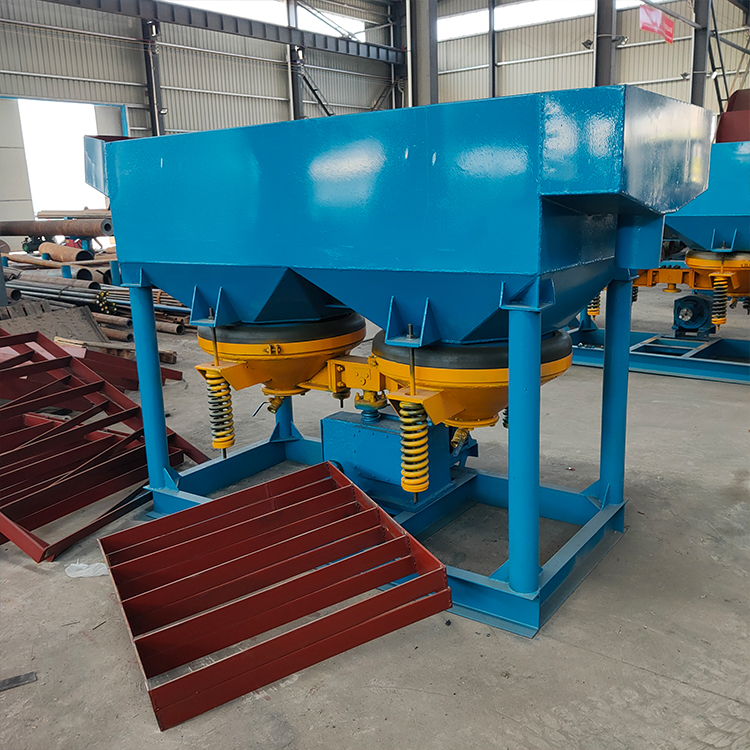
Gravity separation is the foundation of tin ore beneficiation. It utilizes the high relative density of cassiterite (6.8-7.2) to separate it from lower-density gangue minerals (such as quartz and calcite) in a medium (mostly water). Common gravity separation equipment includes jigs (for processing coarse-grained disseminated ores), shaking tables (for fine cleaning, accurately separating tin concentrate), and spiral sluices and centrifugal concentrators (mainly for recovering fine-grained cassiterite).
For tin ores associated with various sulfide minerals (such as chalcopyrite, galena, and sphalerite) or iron-bearing minerals (such as magnetite and limonite), gravity separation alone is insufficient for effective separation. At this point, a combined process of flotation and magnetic separation needs to be introduced.
Flotation: Commonly used for pre-removal of sulfides or for recovery of fine-grained cassiterite. In the process flow, copper, lead, zinc, and other concentrates are typically produced first through flotation, and the tailings are then used for gravity separation to recover tin. This comprehensively recovers valuable elements and eliminates the interference of sulfides on gravity separation.
Magnetic separation: Primarily used to remove iron minerals (such as magnetite and hematite) or for concentrate purification. Since some iron minerals associated with cassiterite are magnetic, they can be separated using magnetic separators, thereby improving the grade of tin concentrate. Magnetic separation can also effectively recover ores containing weakly magnetic minerals such as wolframite.
In actual production, a typical tin ore beneficiation process usually includes stages such as crushing, grinding, separation, and dewatering. For example, when processing cassiterite-polymetallic sulfide ore, the principle process of "flotation desulfurization—magnetic separation for iron removal—gravity separation for tin recovery" is often adopted. To prevent over-grinding of cassiterite during grinding and resulting metal loss, the concepts of staged grinding and staged beneficiation are widely used. In summary, modern tin ore beneficiation technology has evolved into a comprehensive process with gravity separation as its core and multiple beneficiation methods optimized and combined, aiming to maximize the recovery of valuable elements.