Tel:+86 133 6177 9811
Fax:+86 0797 5712751
Email:sale02@miningshakingtable.com
Address:Guzhang Industrial Park,Shicheng County,Ganzhou City,Jiangxi Province,342700,China.
In the world of minerals, monazite has garnered significant attention for its unique single crystal form and rich rare earth element content. It is not only of great significance in geological research but also a key resource for the development of modern industry and technology. This article will provide an in-depth understanding of this mysterious mineral's properties, applications, and the challenges it presents.
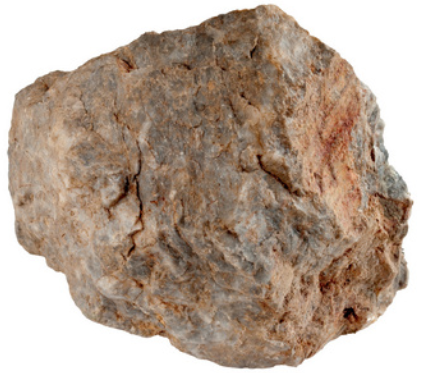
I. Basic Characteristics of Monazite
Monazite is a phosphate mineral containing rare earth elements, with the chemical formula (Ce, La, Nd, Th)PO₄. Its Chinese name is "phosphorus cerium lanthanum ore." Its crystals belong to the monoclinic system and are often plate-shaped or columnar. They are primarily brownish-red or yellow in color, with a greasy or vitreous luster. Its hardness is 5-5.5, and its density is as high as 4.9-5.5 g/cm³. Monazite is naturally radioactive due to the presence of radioactive elements such as thorium (Th) and uranium (U). It fluoresces bright green under ultraviolet light, making it uniquely recognizable in mineral identification.
II. Formation and Distribution: From Igneous Rocks to Coastal Placers
Monazite primarily forms in intermediate-acidic igneous rocks and metamorphic rocks such as granite and syenite. It is also commonly found in hydrothermal deposits and pegmatites. Due to its stable chemical properties and high density, it is often transported by rivers and concentrated in coastal or alluvial placers, forming economically valuable deposits. Important monazite sources worldwide include coastal areas of Australia, Brazil, and India, as well as areas such as Bayan Obo in China and Guposhan in Guangxi. However, large, high-quality crystals are rare and are primarily used for research or collection.
III. Application Value: The "Dual Code" of Rare Earth Elements and Nuclear Energy
1. Core Source of Rare Earth Resources
Monazite is a key raw material for extracting light rare earth elements (such as cerium and lanthanum), with a rare earth element content of 50%-68%. Cerium is widely used in alloy manufacturing, polishing materials, and flints; lanthanum is used in optical glass and catalysts. Rare earth elements are indispensable in high-tech industries such as new energy, electronics, and laser technology.
2. Strategic Role in Nuclear Energy
The thorium-232 in monazite can be converted into uranium-233 through neutron capture, making it a potential source of nuclear fuel. Historically, it was also used to synthesize plutonium-239 for use in nuclear reactors and nuclear weapons. However, thorium's radioactivity also poses environmental risks, prompting countries to strengthen regulations on its mining.
IV. Mining Status and Challenges: Balancing Environmental Protection and Resources
In recent years, monazite mining has been declining, primarily due to the environmental and human health risks posed by its radioactivity. Countries like Brazil and India have implemented mining bans. Although Bayan Obo in China is a major mining area, it faces challenges in both resource efficiency and environmental protection. Scientists are exploring safer extraction processes and seeking alternative rare earth resources to reduce reliance on monazite.
V. Collectability and Conservation: The Rarity of a Natural Treasure
Although monazite has limited commercial gem value, its unique crystal form and large, transparent grains (such as specimens over 5 carats) are considered treasures in mineral collections. When collecting monazite, caution should be exercised regarding its radioactivity and avoid long-term exposure. Geologists are studying the micro-composition and zoning structure of monazite to reveal the history of Earth's evolution and mineral formation.