Tel:+86 133 6177 9811
Fax:+86 0797 5712751
Email:sale02@miningshakingtable.com
Address:Guzhang Industrial Park,Shicheng County,Ganzhou City,Jiangxi Province,342700,China.
Tin ore beneficiation typically employs gravity separation, a method determined by the higher density of tin ore compared to its associated minerals
Tin ore beneficiation typically employs gravity separation, a method determined by the higher density of tin ore compared to its associated minerals. However, tin ore often contains associated iron oxide minerals such as magnetite and hematite, making gravity separation alone insufficient for complete separation. Therefore, magnetic separation and flotation are also used in tin ore beneficiation.
1. Washing and Desliming
This step is for raw materials with high mud content and strong cementing properties. Such materials require washing and desliming before crushing. A trough-type washing machine is used for washing, while a classifier and hydrocyclone are used for desliming.
2. Crushing and Screening
Jaw crushers and hammer crushers are used to crush the raw ore into particles smaller than 20mm. Then, a vibrating screen separates it into two particle sizes: 0-4mm and 4-20mm.
3. Pre-selection Stage
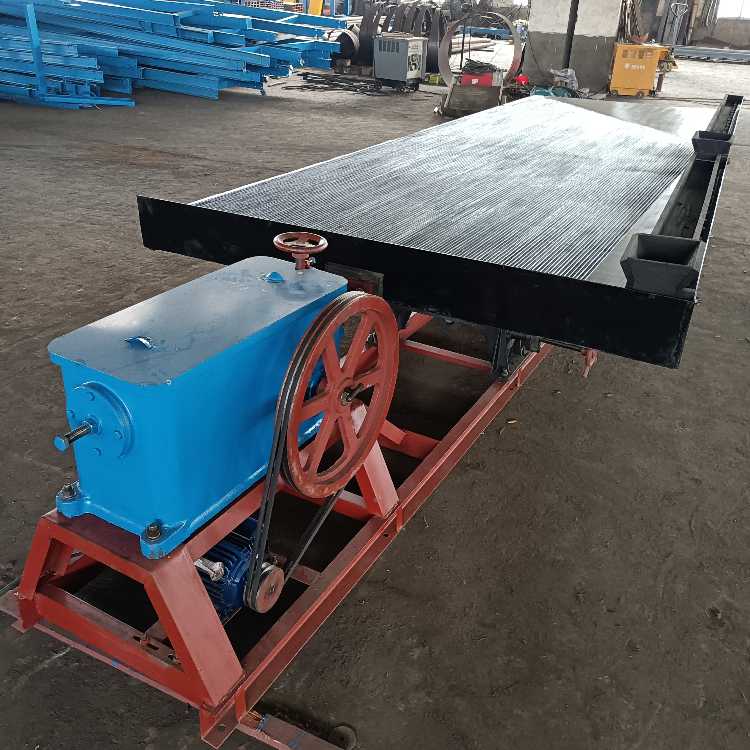
After crushing and screening, the ore enters the pre-selection stage. First, the 4-20mm ore is pre-selected using a heavy media hydrocyclone, then fed into a grinding mill. After grinding, further separation is achieved using a jig and vibrating screen, with the screen size controlled at 2mm. The -2mm ore is then separated into concentrate using a shaking table, and the +2mm ore becomes tailings.
4. Gravity Separation
The slime enters a 300mm hydrocyclone. The overflow is then passed through a 125mm and 75mm hydrocyclone group to remove fine slime. The underflow is concentrated, desulfurized by flotation, and then subjected to cassiterite flotation.
5. Flotation
The flotation stage consists of two steps: mixed flotation and separate flotation. First, the concentrate from the jig and shaking table is mixed flotation. The resulting concentrate is then subjected to lead-zinc separate flotation. The tailings are separated into qualified tin concentrate using a shaking table.